
Solo Household Preparedness
Emergency Preparedness When You Live Alone: A Practical Checklist
Build a calm emergency plan for living alone, including check-ins, medication, power, mobility, pets, evacuation, and an affordable one-person kit.
Save to Pinterest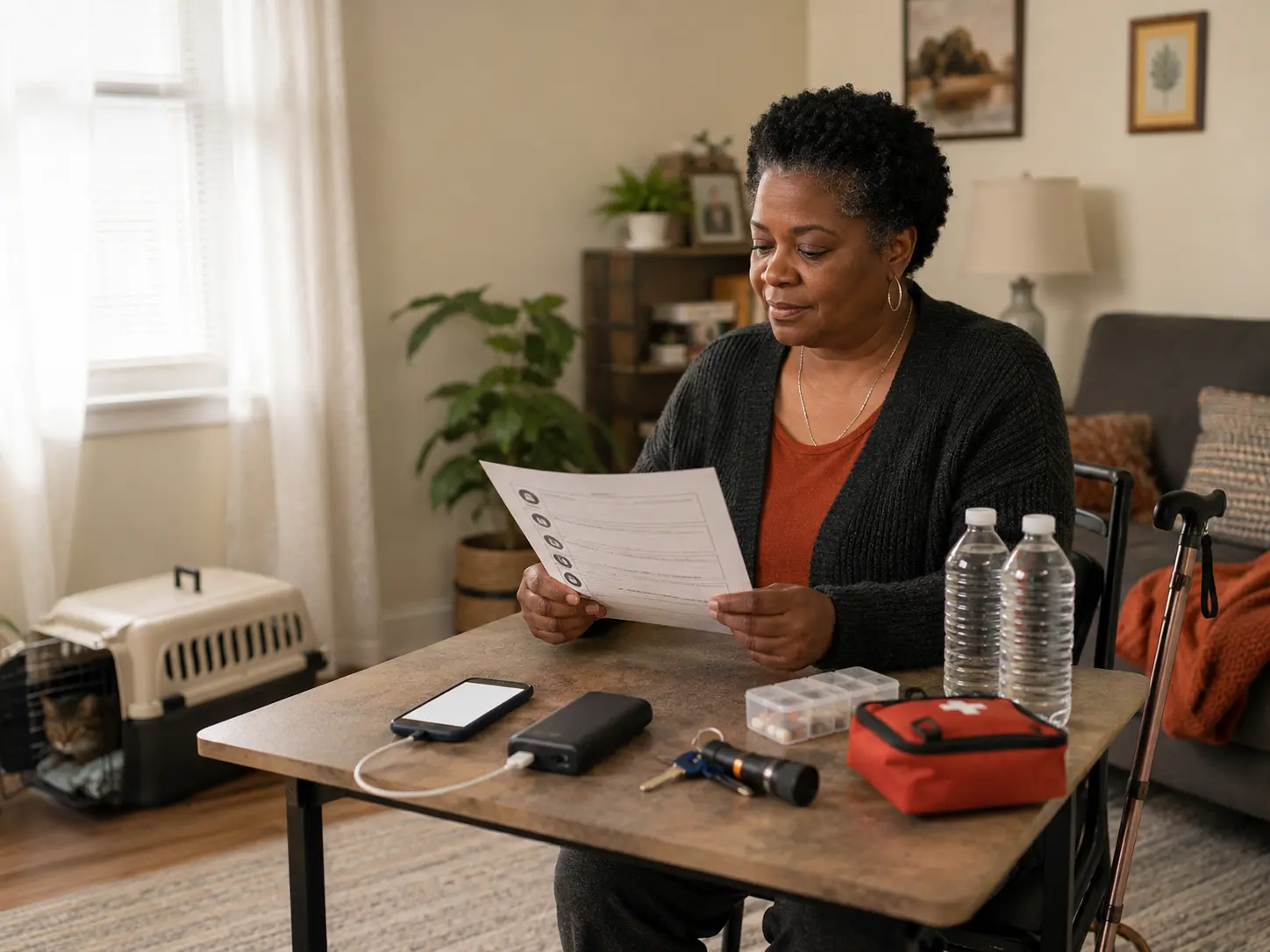
Living alone does not mean preparing alone. The food, water, medicine, lighting, and evacuation basics are familiar, but a one-person household needs one extra layer: a reliable way for someone else to notice when you need help. Build that layer before an outage, storm, evacuation, fall, or illness interrupts your normal routine.

Written by Coach Dex
Practical guidance, checked against primary sources
Coach Dex is the founder and author behind SWC. Safety-sensitive guidance is checked against current government, public-safety, utility, or manufacturer information before publication.
Start with the gap a household of one must close
In a multi-person home, someone else may notice a warning, find the flashlight, move the pet carrier, or call for help. When you live alone, assign those backup roles on purpose. Ready.gov advises people to tailor plans to daily living needs and create a support network when assistance may be needed during an emergency.
Choose at least one nearby person who could safely check on you and one out-of-area person who can coordinate information. They might be relatives, friends, trusted neighbors, faith-community contacts, building staff, or caregivers. Ask before listing anyone, explain exactly what help you may request, and update the plan when relationships or phone numbers change.
- Who will notice if you miss a planned check-in?
- Who has permission to contact building staff or emergency services if you cannot be reached?
- Who could help with transportation, a pet, mobility equipment, or essential supplies?
- Who has a copy of the information you want responders to receive?
Create a check-in plan with a clear next action
A vague promise to call later is easy to miss. Agree on a simple trigger, such as checking in after an evacuation order, when power has been out for a chosen amount of time, after arriving at a destination, or at a set time during a severe-weather event. Choose a primary method and a backup method.
Write what the other person should do if the check-in does not arrive: try a call, send a text, contact the nearby support person or building office, and call 911 when there is reason to believe you face immediate danger. A missed routine message is not proof of an emergency, so agree on the escalation steps together rather than leaving the decision unclear.
- Use a short status format: where you are, whether you are safe, and your next action
- Keep the check-in person's number on paper as well as in the phone
- Do not post evacuation destinations, door codes, medication details, or an empty-home announcement publicly
- Test the plan once during ordinary conditions and fix any confusing step
Build a one-person kit you can reach and carry
Ready.gov recommends keeping enough supplies to manage on your own for several days. Start with what you already use: drinking water, familiar shelf-stable food, a manual can opener, flashlight, batteries, phone power, first aid, hygiene items, weather radio, masks, cash, copies of essential records, and supplies for medical, mobility, communication, and pet needs.
A one-person kit should be manageable by one person. Split heavy items between a stay-at-home supply and a lighter evacuation bag. Store the flashlight, shoes, phone, glasses, hearing aids, mobility aid, and keys where you can reach them in darkness. Keep the evacuation bag near a safe exit without blocking the path.
- Buy normal food in sizes you can finish and rotate it into regular meals
- Use more than one water container so a single leak does not empty the supply
- Label and date supplies in large, high-contrast writing if that helps
- Check batteries, food, medicine, contact details, and pet records on a recurring calendar date
Make medication and medical needs understandable to someone else
CDC recommends talking with a doctor or pharmacist about creating an emergency medicine supply and keeping a current list of prescriptions, diagnoses, doses, frequency, medical supplies, and allergies. Do not change a dose, skip a medicine, combine supplies, or stockpile prescription drugs without professional guidance. Refill rules and insurance limits vary by medicine and state.
If medicine requires refrigeration, ask the pharmacist for the exact safe temperature range, what cooler or cold packs to use, how to avoid freezing it, and what to do after a temperature excursion. FDA advises keeping medicines in watertight containers when flooding is possible. CDC provides medicine-specific outage guidance; do not rely on the appearance of a drug to decide whether it is safe.
- Keep the pharmacy, prescriber, insurer, equipment supplier, and manufacturer numbers with the medication list
- Record implanted devices, allergies, communication needs, and the equipment you must take if you leave
- Keep backup batteries or charging options for hearing aids, communication devices, and approved medical equipment
- Give a support person only the medical information you consent to share and protect copies from casual access
Prepare for an outage without creating a new hazard
Charge the phone and power bank before forecast hazards, turn on official utility and weather alerts, and keep a battery-powered light within reach. If you depend on powered medical equipment, follow the device manufacturer, clinician, and equipment supplier; choose compatible backup power and a powered relocation destination before the outage.
Never use a portable generator, charcoal grill, camp stove, or other fuel-burning equipment inside a home, garage, carport, porch, or near doors, windows, and vents. Keep working carbon-monoxide alarms. Use flashlights instead of candles when possible, and leave early if heat, cold, medical needs, building access, or remaining backup power is becoming unsafe.
Plan communication when calls are difficult
FCC guidance says heavy call volume can congest networks during emergencies. Keep emergency calls brief and use text messages for non-emergency check-ins when calls do not go through. Save local alert sources and the utility outage number before you need them, but keep the same information on paper in case the phone is unavailable.
Preserve battery by lowering screen brightness, closing unnecessary apps, and using low-power mode. Do not turn off official alerts merely to save power. If 911 does not connect, follow local public-safety instructions for available alternatives; ordinary social media messages are not a substitute for emergency services.
Make evacuation workable for one person, mobility needs, and pets
Choose two destinations and more than one route. Confirm who can provide transportation if you cannot drive, whether the destination is accessible, and what help is available with stairs, a wheelchair, walker, service animal, or heavy equipment. If you live in a managed building, ask how alerts, elevator shutdowns, accessible exits, and welfare checks are handled.
Ready.gov advises including pets in the plan and preparing a separate pet kit. Keep identification, a current photo, carrier or leash, food, water, medicine, records, and cleanup supplies ready. Confirm pet rules at both destinations; do not assume a general shelter can accept every animal. Service animals are not pets, but their food, water, equipment, and records still belong in the plan.
- Leave when officials direct your area to evacuate; do not wait for a support person who cannot reach you safely
- Tell the check-in contact where you are going and confirm when you arrive
- Keep both hands as free as possible by using a bag you can safely carry with your mobility aid or pet carrier
- Never enter floodwater, a damaged building, or a restricted area to retrieve a forgotten item
Write a one-page solo emergency card
A short card helps you act under stress and helps another person assist without guessing. Keep one copy in the home kit, one in the evacuation bag, and one with a trusted support person. Review it after a move, new medicine, new pet, new mobility need, or contact change.
- Your full name, address, phone number, preferred communication method, and two emergency contacts
- Check-in trigger, check-in time, backup method, and agreed escalation steps
- Medication, allergies, diagnoses, medical devices, mobility needs, pharmacy, and clinician contacts
- Primary and backup destinations, routes, transportation, building instructions, and pet plan
- Locations of the home kit, evacuation bag, keys, utility shutoffs, and essential records
- Clear instruction: call 911 for immediate danger, serious symptoms, fire, or suspected carbon monoxide
Use an affordable first-week plan
Do not wait until you can buy a perfect kit. On day one, choose the check-in people and write the contact card. Next, gather the flashlight, charger, shoes, keys, medication list, and food already in the home. Add water and one missing item at a time. Practice the check-in and evacuation route before buying specialized equipment.
If cost, transportation, disability, age, or housing rules create a gap, contact local emergency management, 211, an independent-living center, area agency on aging, disability organization, faith community, or building management. Ask what is actually available and eligible in your area; never treat a community program as guaranteed until enrollment or assistance is confirmed.
Common questions
Solo Household Preparedness FAQ
How do I prepare for an emergency if I live alone?
Build the usual food, water, light, medicine, communication, and evacuation plan, then add a deliberate support layer. Choose nearby and out-of-area contacts, agree on check-in triggers and escalation steps, keep essential supplies within reach, and practice how you will leave with medical, mobility, and pet needs.
Who should be my emergency contact if I live alone?
Choose people who agree to the role. A nearby trusted person may be able to check safely or assist with transportation, while an out-of-area contact can coordinate information if local networks are disrupted. Tell each person what you are asking them to do and review the plan when circumstances change.
What should be in a one-person emergency kit?
Include water, familiar shelf-stable food, a flashlight, batteries, phone power, radio, first aid, hygiene supplies, masks, cash, essential records, medication, and items for medical devices, mobility, communication, and pets. Keep a manageable home supply plus a lighter evacuation bag rather than one container you cannot carry.
How much emergency medicine should I keep?
Ask your doctor or pharmacist how to create an emergency supply for each prescription. The appropriate amount and refill options vary by medicine, insurance, and state rules. Keep a current medicine list and never change dosing or stockpile prescription drugs without professional guidance.
What if I miss an emergency check-in?
Decide the response before the emergency. The contact might try a text and call, contact a nearby trusted person or building office, and call 911 when there is reason to believe you face immediate danger. Agree on the timing and steps so a missed message does not leave them guessing.
Should I give someone a key to my home?
That is a personal security decision, not a universal preparedness requirement. If you choose to provide access, use someone you trust, define when it may be used, follow lease or building rules, and avoid putting an address or identifying label on a spare key. Other options may include authorized building staff or a properly managed lockbox.
When should someone living alone evacuate?
Leave when local officials direct your area to evacuate and earlier when medical needs, mobility, building access, temperature, remaining backup power, transportation, or pet safety may become difficult. Do not wait for conditions to worsen or for a support person who cannot reach you safely.
Free private tool
Create your Solo Emergency Check-In Card
Fill it out privately in your browser, then print it or save it as a PDF. SWC does not receive or store your entries.
Open the check-in cardDo this today
Your next three steps
- 1Choose one nearby check-in person and one out-of-area contact, then agree on the trigger and next action
- 2Put a flashlight, charged power bank, shoes, keys, medication list, and paper contacts where you can reach them in the dark
- 3Write the one-page solo emergency card and test one check-in plus one evacuation route this week
SWC provides general education. During an active emergency, follow local officials and the appropriate authorities.