
Food and Water
Start a Food Backup With What You Already Eat
Build a small, useful supply and create a simple rotation habit.
Save to Pinterest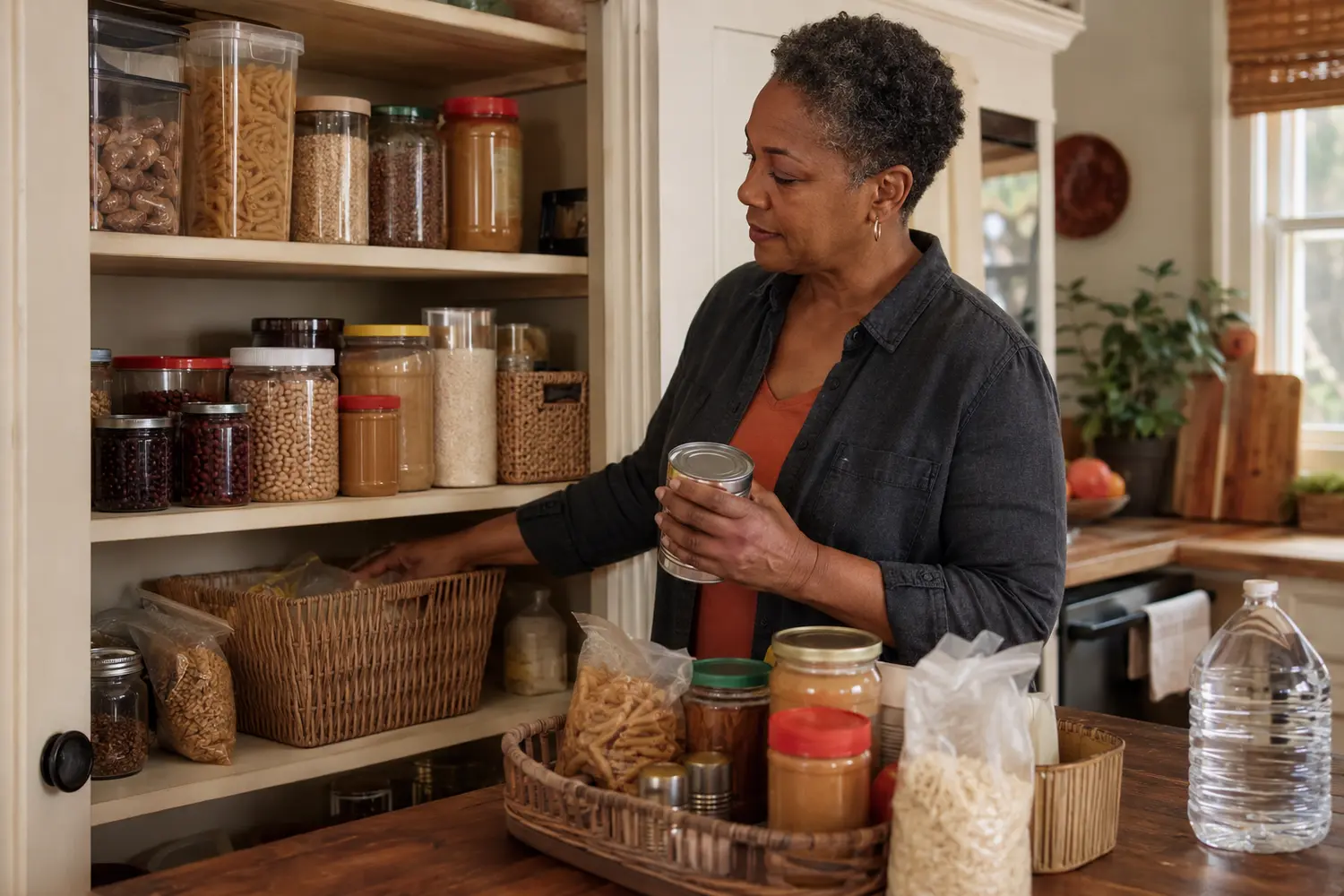
A practical food backup looks more like an expanded pantry than a shelf of unfamiliar emergency meals. Start with foods your household already eats and a rotation system you can maintain.

Written by Coach Dex
Practical guidance, checked against primary sources
Coach Dex is the founder and author behind SWC. Safety-sensitive guidance is checked against current government, public-safety, utility, or manufacturer information before publication.
Plan simple meals, not random cans
Write down several breakfasts, lunches, and dinners that use shelf-stable ingredients and require little or no cooking. Include dietary, allergy, infant, and pet needs.
- Choose familiar foods
- Include a manual can opener
- Plan for limited water and cleanup
Add water deliberately
Store water in clean, food-grade containers and follow official guidance for quantity, storage, and treatment. Keep water away from chemicals, heat, and direct sunlight.
- Label storage and rotation dates
- Include water for medication and pets
- Know where to find local boil-water notices
Use a first-in, first-out routine
Place newer items behind older items and use the oldest in normal meals. A short monthly check prevents waste and makes the backup part of everyday life.
- Check dates once a month
- Replace damaged or leaking packages
- Track meals your household actually liked
Do this today
Your next three steps
- 1Write three no-cook meals
- 2Add one extra of five normal grocery items
- 3Mark a monthly pantry check on the calendar
SWC provides general education. During an active emergency, follow local officials and the appropriate authorities.